FM27 transfer guide: build the squad, not the wish list
A transfer window is a tactical decision with a financial receipt. The best FM27 signing is not the highest-rated player you can afford; it is the one who solves a real problem without creating three new ones.
On this page
1. Build a window plan before you open the shortlist
A good FM27 window starts with a diagnosis. Look at your squad and ask where the tactic breaks. Is the midfield unable to protect the back four? Is the striker isolated? Are the full-backs too slow for the line you want to play? Those are recruitment problems. “We need more stars” is not.
Write down three priorities, in order. Then attach a budget to each: a maximum fee, a maximum wage and an acceptable role. This prevents the classic mistake of spending the entire budget on the first exciting name and then discovering you cannot afford the defensive midfielder you actually needed.
For every signing, name the specific problem he solves and the specific player he replaces in the XI. If you cannot answer both, he is a squad signing, not a priority.
2. Find the real need, not the loudest weakness
The loudest weakness is usually the last defeat: a missed chance, a defensive error or a poor substitute appearance. The real need is the structural gap that keeps producing those moments. Use the match data and the Tactical Effectiveness gauges to distinguish between the two.
- Ability gap: the role is correct but the player lacks the required attributes.
- Understanding gap: the player has the attributes but is not yet fluent in the system.
- Buy-in gap: the player does not accept the role or the direction of the team.
- Depth gap: the starter is fine, but the drop-off to the backup is too steep.
Only the first and fourth are usually solved by the transfer market. The second may be solved by time and training; the third may be solved by a conversation or a leadership change. Buying another player without diagnosing the cause can simply make the problem more expensive.
3. Scout for tactical fit, not reputation
FM27 adds Tactical Effectiveness information to scout reports. Use it as a translation layer between the player’s attributes and your system. A central midfielder may look excellent in a possession side but struggle in a high press if his work rate and stamina do not fit. A winger may be a brilliant dribbler but a poor fit for a low block that needs him to track a full-back.
Scout more than one profile per position. If you only look at ready-made stars, you will overpay. If you only look at wonderkids, you may create a squad with no senior spine. The best windows usually combine a reliable starter, a development prospect and a value cover option.
Our FM27 wonderkid shortlist is filterable by position, age and wage. Use it to find names, then send your scouts. Do not sign a player purely because a community rating is high.
4. Calculate the total cost, not the transfer fee
The transfer fee is the headline. The wage bill is the long-term story. Add up the fee, wages over the contract, agent fees, signing bonuses, loyalty bonuses and any clauses. A free transfer on a huge wage can be a worse deal than a £10m signing on a sensible contract.
| Cost | Why it matters | Check before you bid |
|---|---|---|
| Transfer fee | Affects the current budget and future instalments. | Upfront amount, instalments and sell-on clause. |
| Wages | Sets the benchmark for the rest of the squad. | Weekly wage, annual rise and bonus structure. |
| Agent fee | Often the difference between a deal and a breakdown. | Ask early; do not leave it to the final hour. |
| Clauses | Can earn money later or cost you unexpectedly. | Release clause, sell-on, appearance and goal bonuses. |
| Opportunity cost | Every wage pound is unavailable elsewhere. | Could the same money improve a weaker area? |
5. Negotiation: leave room, not a hostage situation
The strongest negotiating position is a credible alternative. Have a second target for every priority. If the selling club demands a price that breaks your structure, walk away. FM27’s transfer market is not a test of who can press “accept” the fastest.
Practical negotiation habits:
- Start with a fee that is low but not insulting, and use instalments if your budget is tight.
- Keep the wage offer within your existing structure; a new signing should not automatically become the top earner unless he is your best player.
- Use squad status and playing time promises carefully. A promise you cannot keep becomes a morale problem.
- Do not chase a deal after the selling club has made it clear the player is not available. Move to the alternative.
- Leave time for the medical. A failed medical at the deadline is a self-inflicted wound.
6. Loans, free agents and the short-term fix
Loans are not a lesser form of recruitment. They are a way to bridge a gap without committing long-term money. That makes them especially useful for lower-league saves, injury cover and a young player who needs guaranteed minutes. Check the wage contribution and any playing-time clauses; a loan that forces you to pick an underperforming player is a trap.
Free agents can be excellent value, but their wage demands often reflect their reputation rather than their current contribution. Scout their fitness and personality as carefully as you would for a fee. A player who has not trained with a club for months may need weeks to reach match sharpness.
7. Deadline day: do not improvise the plan
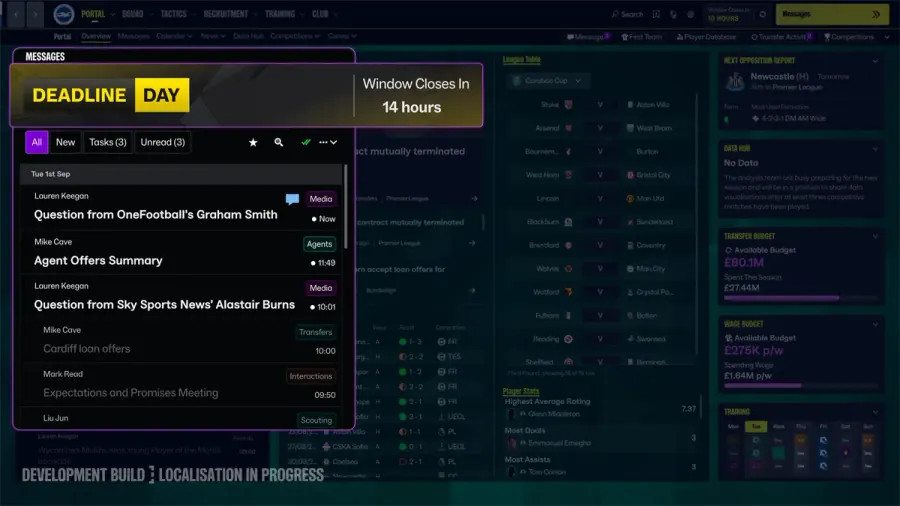
FM27 brings back Transfer Deadline Day with a more dramatic presentation. The atmosphere can tempt you into a panic signing. The same rules apply: identify the need, check the total cost and leave time for the paperwork. If the right deal is not there, keep the money for January or the summer.
Deadline day is a good time to use the loan market for cover, but not a good time to sign a player you have not scouted. A short-term solution can become a long-term problem if the wages and squad status are wrong.
8. Registration, homegrown quotas and the unglamorous details
Before you sign anyone, check the registration rules for your league. A brilliant player who cannot be registered is not a solution. Homegrown and nation-trained quotas can affect squad building, especially in European competition. In long saves, your academy can become a competitive advantage if you plan registration early.
For a club project that fits your budget and expectations, read the FM27 club guide. For the tactical side of recruitment, read Tactical Effectiveness.
FM27 transfer FAQ
Should I spend my whole FM27 transfer budget in the first window?
Usually not. Keep a contingency for injuries, January opportunities and wage increases. A squad with two excellent signings and a functioning wage structure is better than a squad with six average additions and no flexibility.
What is the most important transfer attribute in FM27?
There is no single attribute. Fit with the role, tactical complexity, personality and total cost matter together. A player with excellent technical attributes may still be a bad signing if he cannot press or accept a squad role.
Are loans worth using in FM27?
Yes, especially for lower-league saves, cover positions and giving young players minutes. Check wage contributions and playing-time obligations carefully; a loan that blocks your own prospect can be a net loss.
How does Tactical Effectiveness affect recruitment in FM27?
The system adds tactical execution information to scout reports. It helps you judge whether a target can perform the role in your system, not just whether he has high current ability.
A final window checklist
- Have I named the specific tactical problem each signing solves?
- Can I afford the fee, wages, agent fee and clauses together?
- Does the player fit the squad status and the wage structure?
- Have I left time for a medical and registration?
- Is there a second target if the first deal collapses?
- Am I blocking a young player who deserves minutes?
Field notes
This guide is based on official FM27 information and our own analysis of the systems shown so far. Ratings and in-game examples from the Launch Preview can change before launch. Last checked 31 October 2026.